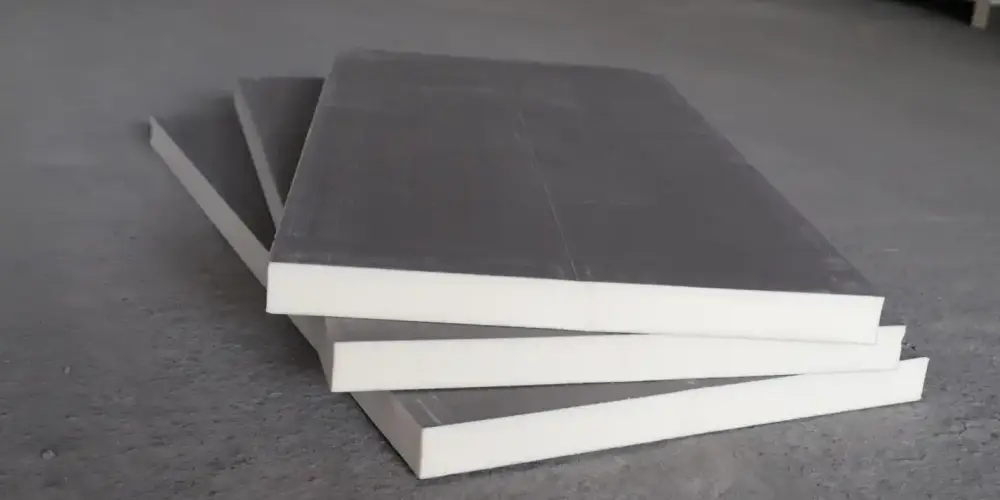
Addressing High Edge Core Density Differential in Continuous PU Sandwich Panels with Pentane Blowing System
The Problem
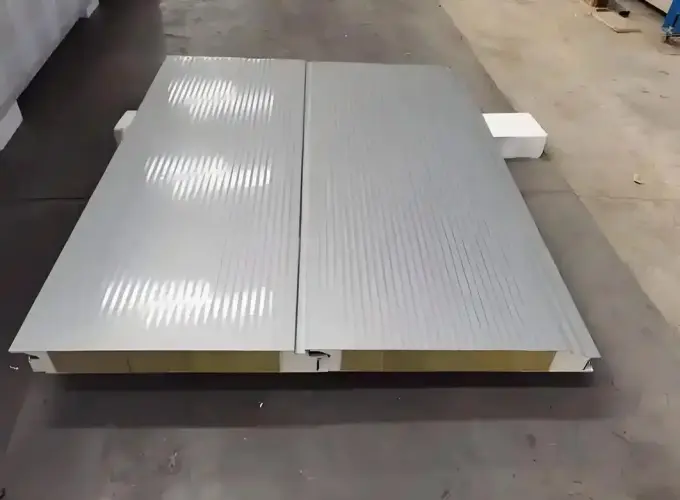
In continuous production of polyurethane (PU) sandwich panels using pentane as the blowing agent, the foam density is never perfectly uniform across the width. The core (middle) and the edges (near the metal conveyor belts) naturally differ. Under normal conditions, an edge to core density ratio of 1.1 – 1.2 is acceptable. However, when this ratio exceeds 1.3 (i.e., edges are 30% heavier than the core), serious quality issues arise – warping, waviness, edge delamination, and poor adhesion.
So, why does this higher than normal density differential occur, and what can we do about it?
Root Causes
The excessive density difference is not due to a single factor. It comes from three interacting imbalances:
1. Thermal Imbalance (the main driver)
Pentane has a high latent heat of vaporisation – about 380 kJ/kg. During foaming, it absorbs a lot of heat. At the panel edges, the metal side seals and conveyor belts pull heat away very quickly. This cools the edge foam, slowing down the chemical reaction and the expansion. In the middle, heat builds up, helping the foam rise fully. As a result, the edges do not expand as much and end up with much higher density.
2. Flow Restriction at the Edges
The material experiences higher friction near the side seals (the “boundary layer” effect). At the same time, the physical squeezing from the seals compresses the foam before it has time to develop its cellular structure. This traps extra liquid polymer at the edges and forces it into a denser, more compact state.
3. Pressure Build Up
These two effects combined create uneven internal pressures. The edge foam cures under higher stress, while the core remains more open celled. The mismatch in internal stress often leads to distortion after cutting or temperature changes.
In simple terms: the edges cool too fast, get squeezed too hard, and cannot expand freely – that’s why the density jumps up.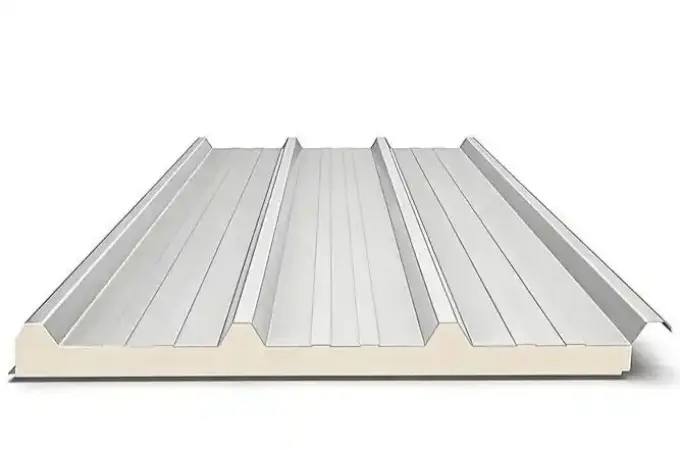
Systematic Solutions
To effectively control this differential, we must address all three imbalances together. A single adjustment (like raising overall mould temperature) is not enough. Here is our proven four layer approach:
1. Separate Edge Heating (Equipment Layer)
Install independent oil heating circuits inside the side seals. Set these edge heaters 5-8 °C higher than the centre zone of the conveyor belt. This extra heat compensates for the rapid heat loss caused by pentane evaporation at the edges. Also, inspect the side seal clearance daily – if the gap exceeds 0.3 mm, replace the seals immediately to prevent cold material from seeping in and solidifying prematurely.
2. Dynamic Catalyst Compensation (Formulation Layer)
Add a high activity tertiary amine catalyst to the system. Use the machine’s separate injection ports to feed a slightly higher catalyst dose to the edge zones. The key principle is: make the edge foam gel faster – before it expands. By speeding up the gelling reaction, the foam builds enough viscosity to resist being squeezed away by the side seals.
3. Controlled Overpack and Compression (Process Layer)
Keep the overpack ratio strictly between 1.08 and 1.12. In pentane systems, exceeding 1.15 causes edge pressure to spike exponentially. At the same time, set the side seal compression ratio to about 0.92 -0.95 – meaning you leave sufficient space for the edge foam to expand naturally, rather than crushing it.
4. Regular Density Monitoring (Quality Control)
Every shift, cut a cross section sample from the panel and scan the density across the entire width using a portable density scanner. If the edge density begins to creep up, immediately adjust the edge temperature or the compression ratio. This creates a fast feedback loop – detect, adjust, verify – within minutes.
Results Achieved
By applying these four measures, we consistently maintain the edge to core density ratio below 1.15 (i.e., a difference of less than 15%). This eliminates warpage, surface waviness, and edge separation caused by uneven internal stresses. The process becomes more stable, and scrap rates drop significantly.